6 Clothes Dryer Hacks that may Surprise You!
Clothes Dryer Hacks for an Easier Life.
Everything you wanted to know about Drying Clothes and More.
Laundry is an inevitable chore but one that can be made simpler with some of our Dryer Hacks.
Introduction to Clothes Dryer Hacks.
Have you ever put off doing the laundry and then found yourself needing an item of clothing last minute? Frustratingly, everything you like is dirty. Do you end up putting just one item on a quick wash, then putting it in the dryer?
Yet, does it seem to take forever to dry? Have you ever put on a still just slightly damp item of clothing hoping no one will notice? And even if they don’t, it feels weirdly uncomfortable, and your outfit is susceptible to a lot of wrinkles.
Wouldn’t it be better to be organized and have an easy plan for laundry? Below we have included some dryer hacks to help effectively, efficiently and economically dry your clothes.
Drier or Dryer?
In our opinion, the word for the machine that dries your clothes is a dryer. Dryer is a noun as opposed to a drier, which is an adjective. Does it really matter? Not really, unless you are taking an English exam. However, folks seem to have different names for that machine that dries the laundry, as we can attest to when taking bookings.
We have lost count of the number of times we’ll ask: “do you want the dryer vent cleaned while we are there?" only to hear confusion. And so, we will often have to mention alternative names such as: clothes dryer, tumble dryer, washer-dryer, clothes drying machine. The point is, no matter what you say or how you spell it, below are some dryer hacks that hopefully help to make your life run a little smoother.
Items you should not put in the Clothes Dryer and why.
- Bras, tights and nylons – We must confess we tend to put these items in the dryer even though it may affect their quality. Bras have elastic and spandex to add bodily support. Dryers can weaken the support of bras. However, we feel it’s personally worth the risk.
- It may be useful to put bras and tights in a wash-bag. Their hooks and straps, etc. can easily get tangled up with other clothes and damage them. A netted wash-bag helps stop that from happening.
- Delicate Fabrics – Lace, chiffon, and silk can easily snag on other items. Plus, the dryer can cause permanent wrinkles in the material.
- Leather or Suede and even Faux Leather – do not respond well to heat. It can distort their shape or simply ruin the look.
- Velvet – It is not recommended for the dryer because it will not keep the same look. Dry cleaning is recommended.
- Spandex – A stretchy material which can be hindered by the heat of a dryer. Some are okay to add, others not so much. It’s best to check the clothing tags.
- Fur – Natural or Faux Fur – Heat is not good and the fabric will lose its natural look. Bathing Suits, apparently hold their shape better if allowed to dry naturally. Although I have to confess this is another item, I tend to risk putting in the dryer.
- Wool, cashmere, rayon and other knitted fibres – will shrink from the heat. I let my woolens, once spun, dry over the back of a chair covered in a towel. I make sure the arms are also folded over the chair so as not to overstretch them. But please follow the washing instructions.
Clothes Dryer Codes.
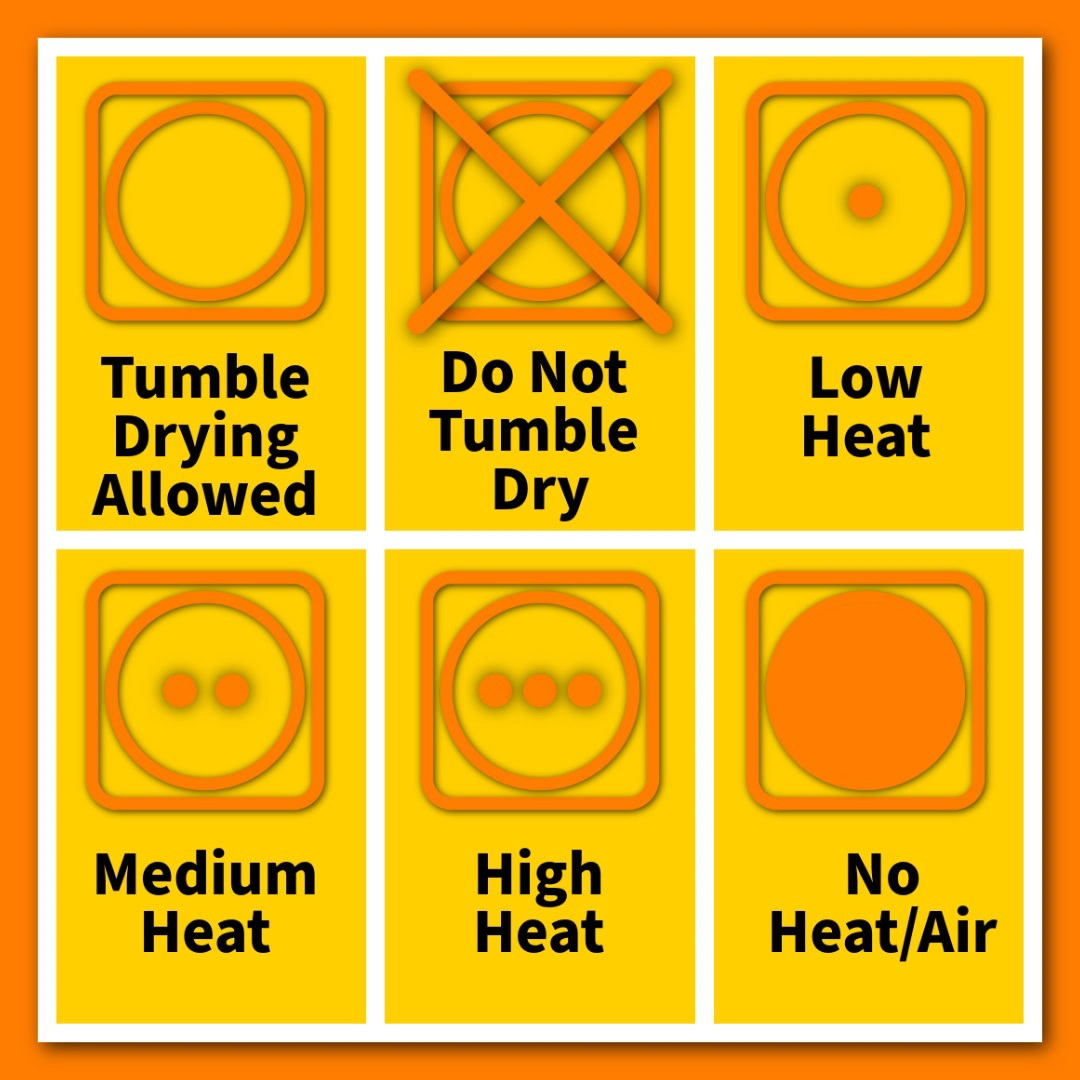
Prior to washing and drying your clothes, it is best to check the laundry labels. The square with a circle in it means you can tumble dry the item. However, if that Square and Circle have an X over them, do not tumble dry. For a list of other laundry symbols, see Tide’s: “How to Read Laundry Symbols”
Items to Replace Dryer Sheets and Other Clothes Dryer Hacks.
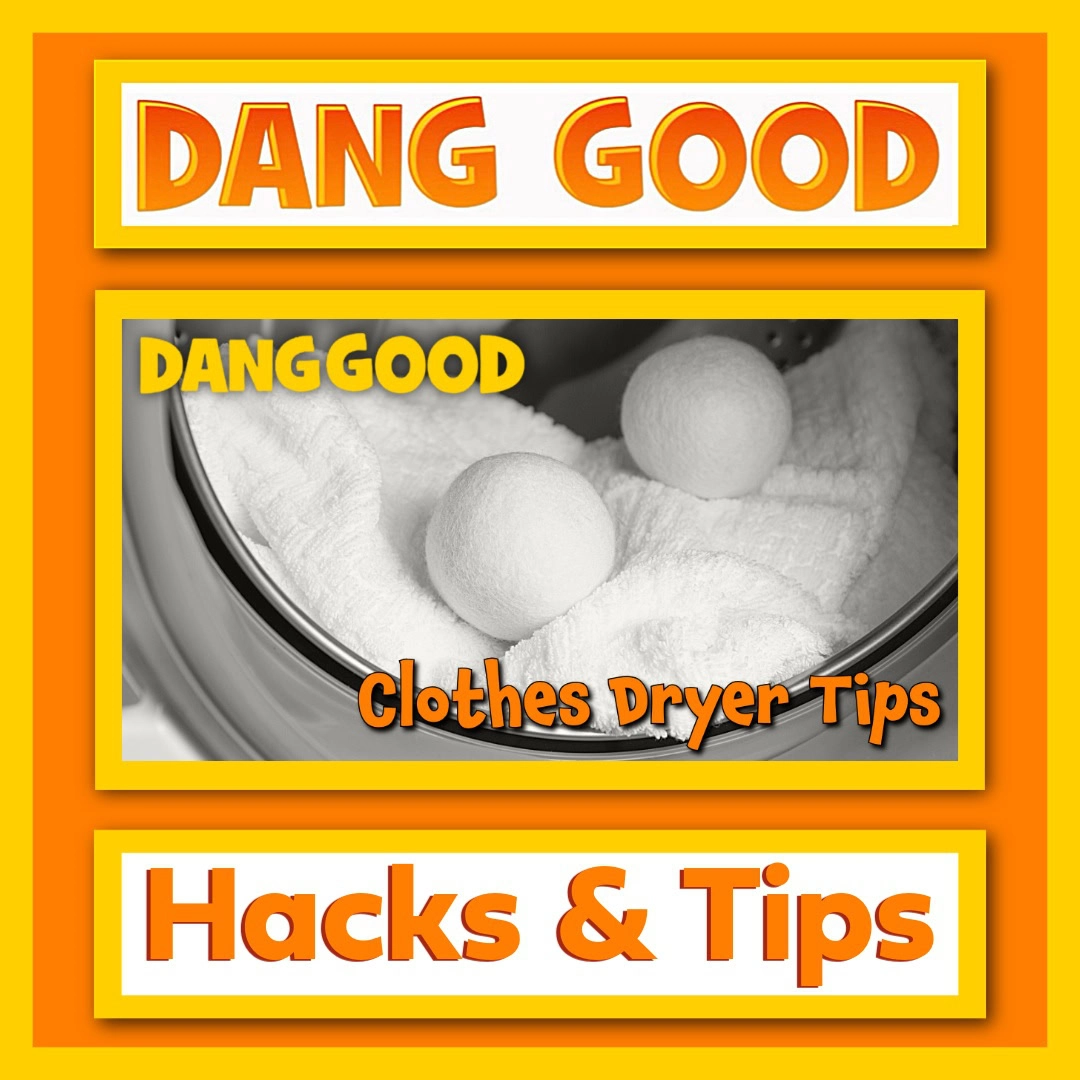
- Aluminum Foil Balls -Take a large sheet of aluminum foil – about 4 square feet. Scrunch the foil into a ball. Compress as much as you can. You’ll need to make the ball as smooth as you can so the foil doesn’t snag on delicate clothes. You’ll need two or three per load. If all you want is to eliminate static in the dryer and avoid clothes being statically stuck together. This is a good option.
- Scented Homemade Woolen Balls – One of our favourite dryer hacks
- You will need to make 2 to 4 balls.
- Use 100% wool yarn, which is fire-resistant and tolerant of heat. Make a loop with the wool with your three middle fingers.
- Then remove a finger. Twist the loop and press together to make a lump. Then wrap wool around the lump, changing directions every three to four wraps until the wool starts to form a ball.
- Continue until you reach the size of a tennis ball. Use a yarn needle to pull the wool through the ball to secure it.
- Add a ball to one leg of some old nylons. Push right to the bottom, then tie with a length of cheap, non-felting yarn. Add the next ball and tie with the cheap yarn until all balls have been added.
- Add the collection of wool balls to the washing machine with similarly coloured clothing that can tolerate a hot water cycle.
- Then tumble dry on high heat. The aim is to ‘felt’ the balls. The washing and drying process may need doing more than once. Once felted, remove the balls from the nylons.
- They are now ready to use, in a similar way to the aluminum balls. However, you can add a couple of drops of your favourite essential oil to each ball if you want to add scent to your clothes.
- The balls help separate items in the dryer, which will assist in drying. They also absorb moisture. In addition, they help with softening.
- Soak sponges in fabric softener mixed with water (equal amounts). Cut sponges in half and add them to a solution of two cups of water and two cups of fabric softener. Store in a container with a sealed lid. When ready, lift out one sponge and squeeze out excess liquid back into the container and add to the dryer with the clothes for drying. This will soften and scent clothes and remove static.
- Wrinkle-free with ice cubes – If your clothes have dried with lots of creases. Add a couple of ice cubes to the dryer and place on high heat for a few minutes. This will essentially act as a steam cleaning for your clothes and will help remove the wrinkles. Another alternative is to take clothes out one by one towards the very end of the drying cycle and folding them. Folding your clothes while still warm prevents unnecessary wrinkles that a bundle of clothes can cause if left scrunched up in the laundry basket and left to go cold.
- Faster drying times with a dry towel – Hard pressed for time and want those clothes to dry quicker? Then add a clean, dry towel in with that wet load. The dry towel will absorb some of the excess moisture. You can also add essential oil to the towel if you want your clothes scented.
- Faster drying times with a clean filter – A clogged filter limits airflow, which hinders drying. To ensure efficient drying, clean the lint filter every time. For safety reasons, you should also regularly clean the filter because lint is flammable. Keep a small bin within reach to remove the lint regularly.
Reasons to Avoid Adding Too Many Clothes to the Dryer.
- Ordinarily, you should not load the drum to much more than half full.
- Overloading the dryer will not save you time, money, or energy. Clothes just take longer to dry.
- An excessive load is a strain on various components of the dryer, including the drum and bearings. You risk labouring the dryer to the point of needing repair. The motor could burn out.
- In addition, there is a safety issue. If the motor has to work harder to dry your clothes, it may overheat.
- Even if an overloaded dryer did dry the clothes quicker, it would not dry them properly. Clothes would come out wrinkly. Warm air needs to flow easily as the drum turns. The advantage of using a dryer is that when done right, very few clothes need ironing. Not having to iron is an energy saver.
- Heavier loads mean excessive lint is produced. Lint is another safety hazard. See below.
-
Make sure Clothes are not Extra Wet.
Excessively wet clothes that have just been spun may be a sign that you’ve overloaded the washing machine. If you’ve overloaded your washer, you’re guaranteed to overload the dryer. See above.
Clothes Dryer Sheet Hacks.
If after reading our Dryer Hacks, you decide that dryer sheets are still the way to go, here are some dryer sheet hacks instead.
- Stick a dryer sheet at the bottom of the laundry basket to keep it fresh.
- Sharpens scissors – cut through a folded dryer sheet.
- Add between towels and pillowcases and sheets to keep them fresh.
- Remove dust from baseboards.
- Clean an iron by ironing over a dryer sheet. The mess comes off onto the sheet.
- Remove marks from glass.
- Remove streaks and water marks from chrome and stainless steel.
- Add a dryer sheet to the bottom of a garbage can to keep it smelling fresh.
The Danger of Dryer Lint Buildup.
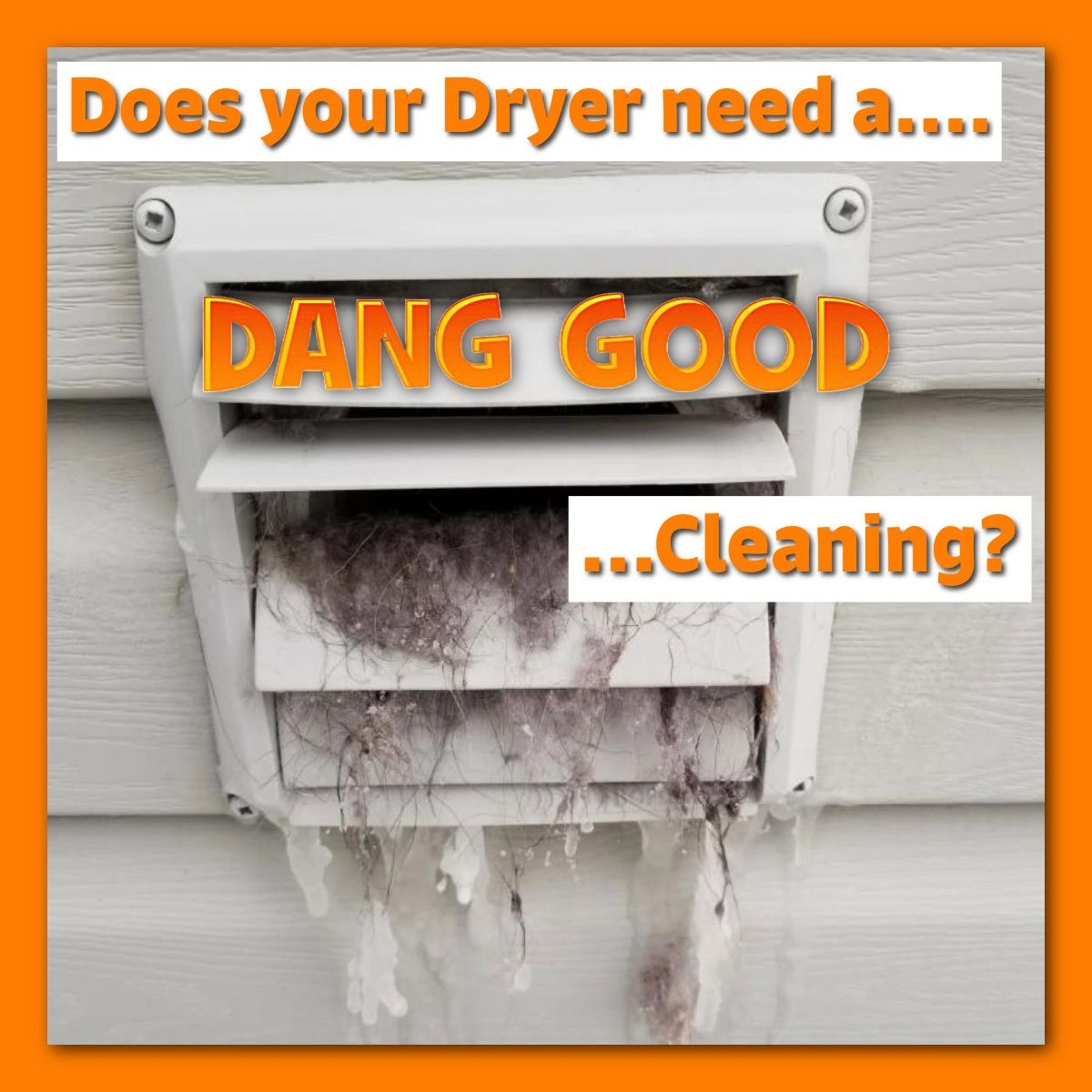
Whilst a clothes dryer is one of the most convenient appliances, excessive dryer lint is a fire hazard. According to the National Fire Prevention Association (NFPA), there are over 13000 fires in homes involving clothes dryers. 33% of those were a failure to clean.
The NFPA Safety Tips advise that you should make sure snow does not cover the outside vent flap in winter. They suggest clearing the lint from the vent pipe once a year.
Indications of Lint Build-Up in the Dryer Vent Pipe
-
- Clothes take ages to dry. Despite trying the various options above.
- Outside the dryer is exceptionally hot.
- Clothes seem hotter than usual once they are eventually dry.
- When the dryer is on, the outside flap doesn’t open much, showing a lack of airflow through the pipe.
- Lint is visible on the outside vent, as shown in the picture above.
Why not get a dryer vent add-on when you book your Furnace and Duct Cleaning?
For some more home tips, see our other Cleaning Hacks. In particular, see our Laundry Room Cleaning blog post.
Feel free to Share our Dang Good Blog Post: “6 Clothes Dryer Hacks that may Surprise You!"
#dryerventcleaning #dryerballs #dryervent #dryersheets #clothesdryer #ductcleaning